
Hearing loss and tinnitus are both incredibly common conditions, but what’s interesting is that they’re often partnered up: 90% of people with tinnitus also have hearing loss.1 Today, let’s explore why that is so.
How Hearing Works
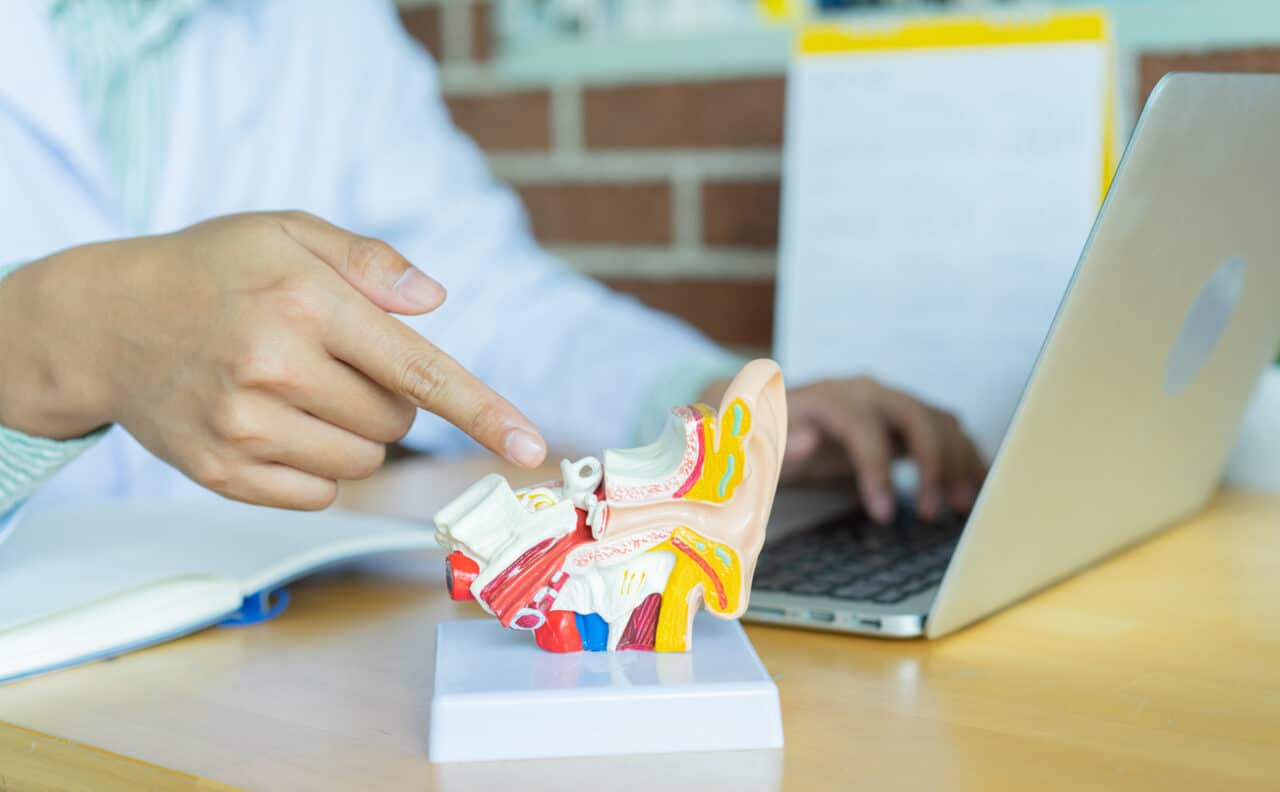
The process of hearing is incredibly complex. Sound waves travel down the ear canal and enter the inner ear, which is the seat of the main hearing organ, the cochlea. Inside the cochlea are thousands of tiny hair-like sensory cells that wiggle in response to incoming sound waves, like flags in the wind. They collect these wiggles and turn them into electrical impulses.
Each individual hair cell specializes in collecting its own specific pitch. The cells toward the front of the cochlea pick up the higher pitches, and the cells toward the back pick up the lower ones. Once they’ve converted their motion into electrical signals, they send those signals to the brain, where they are processed and heard in the temporal lobe.
Hearing Damage
When hearing loss occurs, it is most commonly due to the damage or degradation of those hair cells. This is what happens with age-related hearing loss (presbycusis) and noise-induced hearing loss (NIHL). If a hair cell is damaged, it cannot heal itself or regenerate. As a result, the cochlea will no longer be able to collect that cell’s specific pitch to send to the brain.
Tinnitus
Tinnitus is a condition in which a patient hears phantom sounds, most often ringing or humming. These sounds do not come from a sound wave, but instead are generated inside one’s own brain.
The temporal lobe in the deep brain is clever: it notices when it is receiving less sound information than it ought to. To make up for what it thinks is missing, the temporal lobe will generate its own sound to fill in the gaps in auditory information.
How Hearing Aids Can Help with Hearing Loss and Tinnitus
Hearing aids are incredible modern health devices that amplify sounds into the ear. Better yet, prescription hearing aids fitted by a professional audiologist will sort sound by pitch and only amplify those pitches that you struggle to hear, rather than indiscriminately turning up the volume on the whole world. This is how they help with hearing loss.
By enhancing auditory input to the brain, hearing aids help convince the brain that it doesn’t have to fill in the gaps on its own, so perception of tinnitus can be reduced. Moreover, hearing aids can be an effective tool for acoustic therapy, which is a common tinnitus management strategy.
If you suffer from tinnitus, hearing loss or both, contact Center For Hearing to discuss how you can manage these conditions. Hearing aids may be a great option for you, but we also specialize in other hearing devices and counseling. Call today to learn more.
Learn More
Sources
1 Hearing Loss & Tinnitus Statistics — Hearing Health Foundation. (2014). Hearing Health Foundation. Hearing Health Foundation. https://hearinghealthfoundation.org/hearing-loss-tinnitus-statistics